
If we could only keep one material besides stone, it would be the railway sleeper. Hardly a month goes by without us building something from them in a Derby garden: a raised bed, a run of steps, a wall holding a lawn where it should be. They are quick to build with, they suit both old cottages and new builds, and they make level changes affordable.
Here are the jobs sleepers do best, and the build details that decide whether they last five years or twenty five.
Raised Beds: The Classic Sleeper Job
A sleeper raised bed does three things at once. It gives you somewhere to plant that the dog and the football cannot reach, it puts the soil at a height your back will thank you for, and it gives a flat garden some shape.
We build them two or three sleepers high, screwed together with proper timber fixings rather than nailed, lined on the inside so the soil is not sat directly against the wood, and filled with decent topsoil rather than whatever came out of the hole. On the multi-level patio we built in Swadlincote, the sleeper planter runs alongside the steps and ties the two patio levels together.
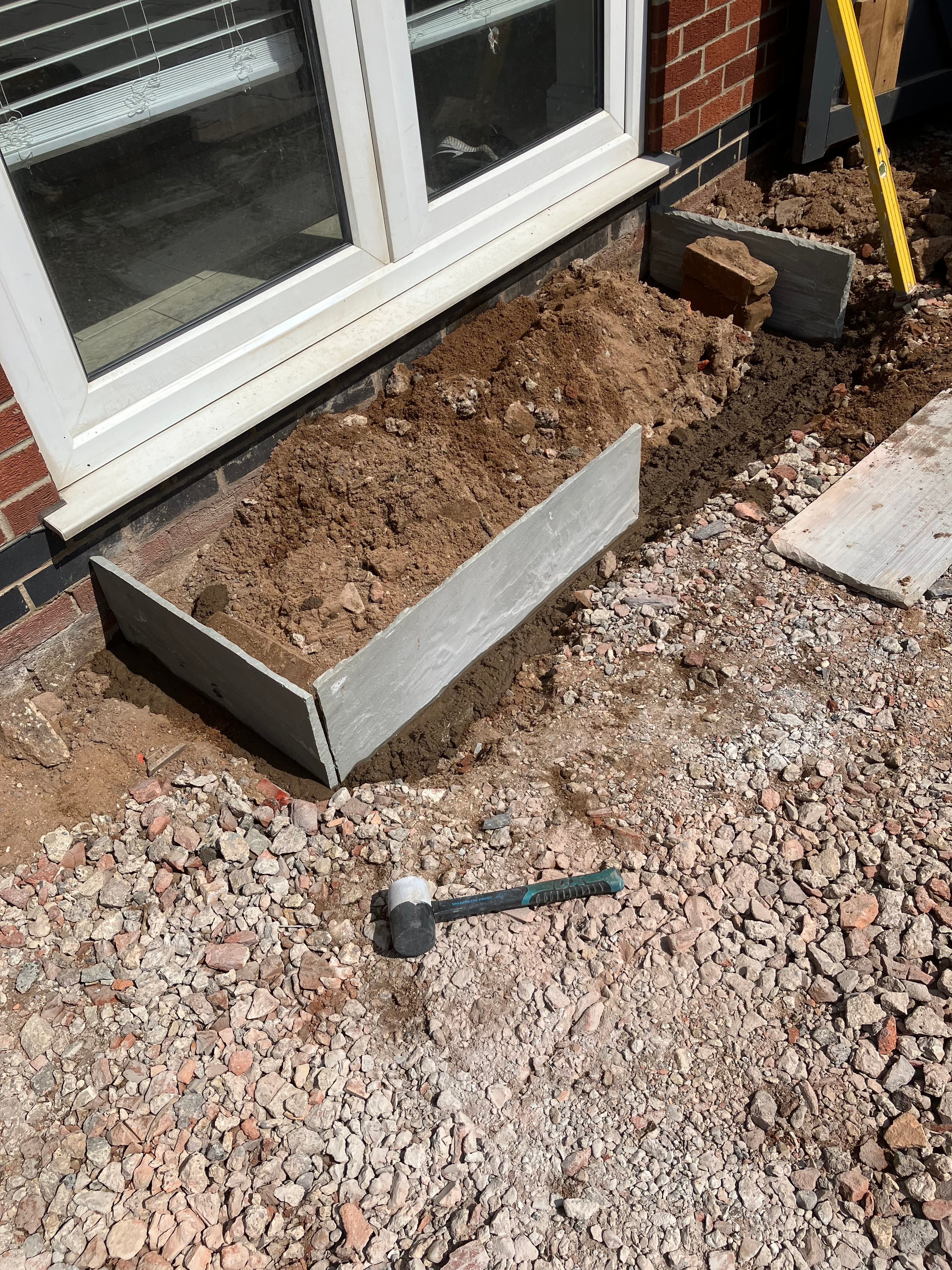
Retaining Walls and Terracing
Plenty of gardens around Derby and the Amber Valley sit on a slope, and sleepers are the most cost-effective way to terrace one. Cut into the bank, retain it with sleepers fixed back to solid posts, and a slope you could never use becomes two flat levels you can.
The part you cannot see matters most here. Soil holds water, water pushes, and a sleeper wall with no drainage behind it will lean within a couple of winters. Ours get gravel and a drainage route behind the wall, a membrane between soil and timber, and posts concreted in, not spiked.
Steps That Match the Garden
Sleeper steps suit gardens where cut stone would look too formal. A sleeper riser with a gravel or paved tread is safe, grippy and wide, and it goes in quickly. On sloping plots we often pair them with sleeper terracing so the whole level change looks like one piece of work rather than three separate fixes.
Edging, Borders and the Small Jobs
A single sleeper on edge is still the tidiest border between lawn and gravel that we know. It keeps stone off the grass, gives the mower a clean line to run against, and visually squares up a garden for very little money. We use them around play areas with artificial grass too, where they double as a neat frame and a fixing edge.
Oak or Softwood?
| Treated softwood | Oak | |
|---|---|---|
| Life in the ground | Roughly 10 to 15 years | 20 years and more |
| Look | Uniform, takes stain well | Character, silvers as it weathers |
| Weight and build | Easier to work with | Heavy, slower to build, solid feel |
| Cost | Lower | Roughly double softwood |
As a rough guide only: yard prices move around, and the labour side depends entirely on groundwork and fixings, which is where the real money in sleeper work goes. For soil-retaining jobs we usually steer towards oak or a heavier softwood spec, because rebuilding a retaining wall is a much bigger job than rebuilding a bed.
What Sleeper Work Costs
Like patios, the honest answer is that the timber is the smaller share. What moves the price is digging and disposal, the base the sleepers sit on, posts and fixings for anything retaining soil, and access to the back of the house. A pair of raised beds is a quick, affordable job; terracing a sloping garden with steps is a proper project.
If you want a number for your own garden, our instant quote tool will get you close, or send us a couple of photos and we will price it properly.
Where to Start
Have a walk around the garden and look for the spot that annoys you most: the bank you cannot mow, the bed the dog flattens, the muddy slope to the shed. That is nearly always where a sleeper solves the problem. Tell us what you are dealing with and we will tell you what we would build, no obligation either way.