
If we counted the reasons Derby customers give for switching to artificial grass, dogs would win by a mile. The story is always the same: a lawn that turns to a mud slide every winter, brown scorch patches all summer, holes by the fence, and a kitchen floor that is never clean.
Artificial grass fixes all of that, but only if it is specified and built for dogs from the start. The difference between a lawn that copes with a spaniel and one that fails is mostly underground, so this is what to look for.
Why Dogs and Real Lawns Fall Out
It is not the dog's fault. A real lawn needs recovery time, and a dog on the same patch every day never gives it any. Paws wear running lines along the fence, urine burns the grass in circles, and winter turns the worn bits to mud that comes straight inside.
You can re-turf every couple of years, or you can put down a surface that does not care. Most of the dog owners we work for have done the maths on their own hallway floor and picked the second option.
What Makes a Grass Dog-Proof
Pile height: around 25 to 30mm. Long, soft 40mm grasses look lovely on day one and flatten into running tracks by month three. A shorter, denser pile springs back and is far easier to clean.
Stitch density: more stitches per metre means more blades holding each other up under heavy use. It is the difference you feel when you run a hand against the pile, and it is where good grass earns its price.
Backing and drainage: the whole surface needs to drain, fast. We fit grasses with fully permeable backing, laid over a compacted, free-draining stone base, so rain and everything else goes straight through instead of sitting on top.
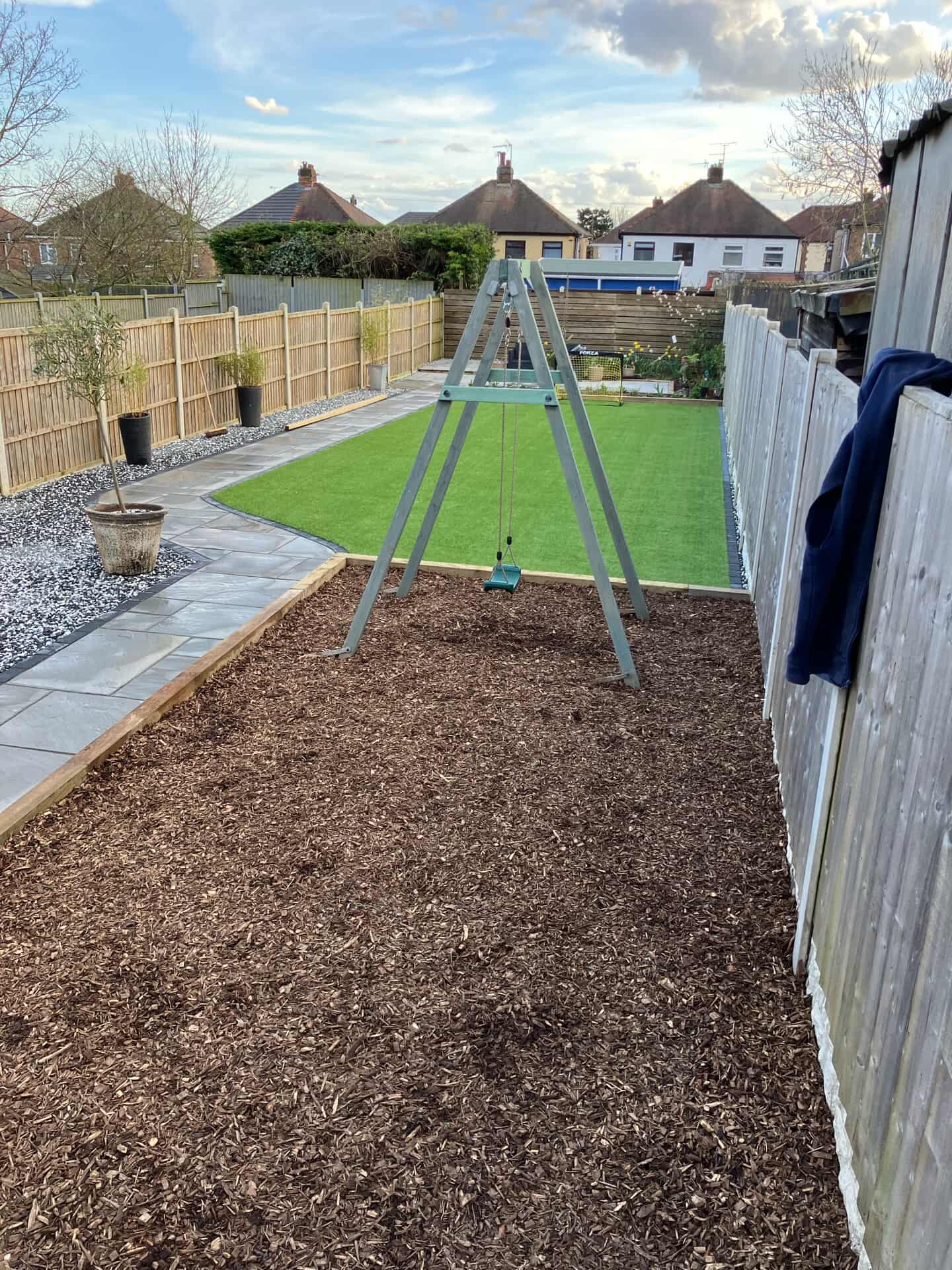
Fixed edges: the classic failure point with dogs is an edge they can get a claw under. Ours are secured to a solid perimeter, often a sleeper edge that doubles as a tidy border.
The Urine Question, Answered Honestly
This is the one everyone wants to ask. Urine does not damage artificial grass, so the brown circles are gone for good. The only risk is smell, and that comes down to drainage.
On a proper install, liquid passes through the backing into the stone base and away. Nothing lingers. On a cheap install where grass sits over soil or a moisture-holding sand layer, summer heat can find something to work with. That is the whole difference.
The routine that keeps a dog lawn fresh is short: pick up solids as you would on any lawn, run the hose over the favourite corner in warm spells, and use a pet-safe enzyme cleaner every so often if your dog is territorial about one patch. Five minutes a fortnight, no mower involved.
What It Costs With Dogs in Mind
Dog-spec grass sits in the mid-range and premium bands rather than the budget end, mostly for the denser stitch and better backing. The install cost is the same as any well-built artificial lawn, and the groundwork is identical. Our artificial grass cost guide has the full Derby figures, or the instant quote tool will price your actual garden in a couple of minutes.
Real Grass Isn't Dead Yet
To be fair to the real stuff: a big garden with a young dog and room to rotate wear can keep a living lawn, and we lay plenty of new turf too. The honest dividing line is size and drainage. Small garden, big dog, heavy Derby clay: artificial wins. Large garden, decent drainage, patience for repairs: turf can hold its own.
If you are on the fence, send us a photo of the garden and an honest description of the dog. We fit both surfaces, so you will get a straight recommendation rather than a sales pitch, and every quote through our artificial grass and turf service is free and itemised.