
Most patio enquiries we get start the same way: someone has a tired bit of slabbing or a patch of lawn that turns to mud every winter, and they want something they'll actually use. The ideas below are the ones that come up again and again on jobs around Derby, Mickleover, Allestree and out into Derbyshire. None of it is complicated. It's mostly about getting a few decisions right before anyone lifts a slab.
Start with how you actually use the garden
Before materials or shapes, work out what the patio is for. A spot for morning coffee in the sun is a different patio from one built around a dining table for ten, which is different again from a low-maintenance surface so the kids have somewhere dry to play.
It sounds obvious, but it's the step people skip. We've laid beautiful patios that the owner later admitted were in the wrong corner of the garden because they followed the back of the house instead of following the sun. Spend a weekend noticing where the light actually lands at the times you'd be out there. Then build to that.
Match the material to the house
The patio that looks right is usually the one that sits well with the brick and the style of the property.
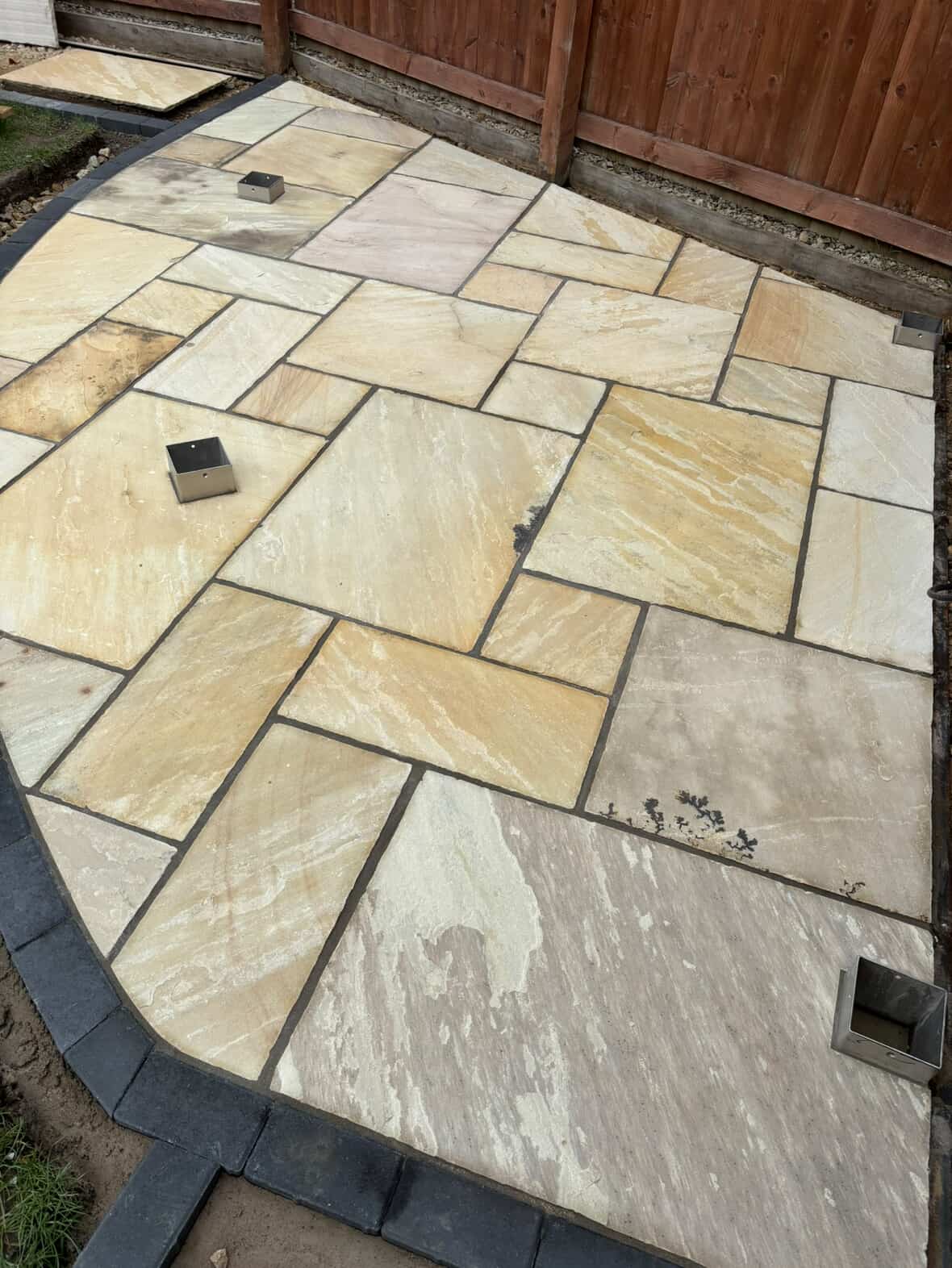
Indian sandstone suits most traditional Derby houses. The colour varies across the slabs and the texture is real, so it warms up a garden and sits happily next to planting. Buff and Raj Green tones go with red brick particularly well.
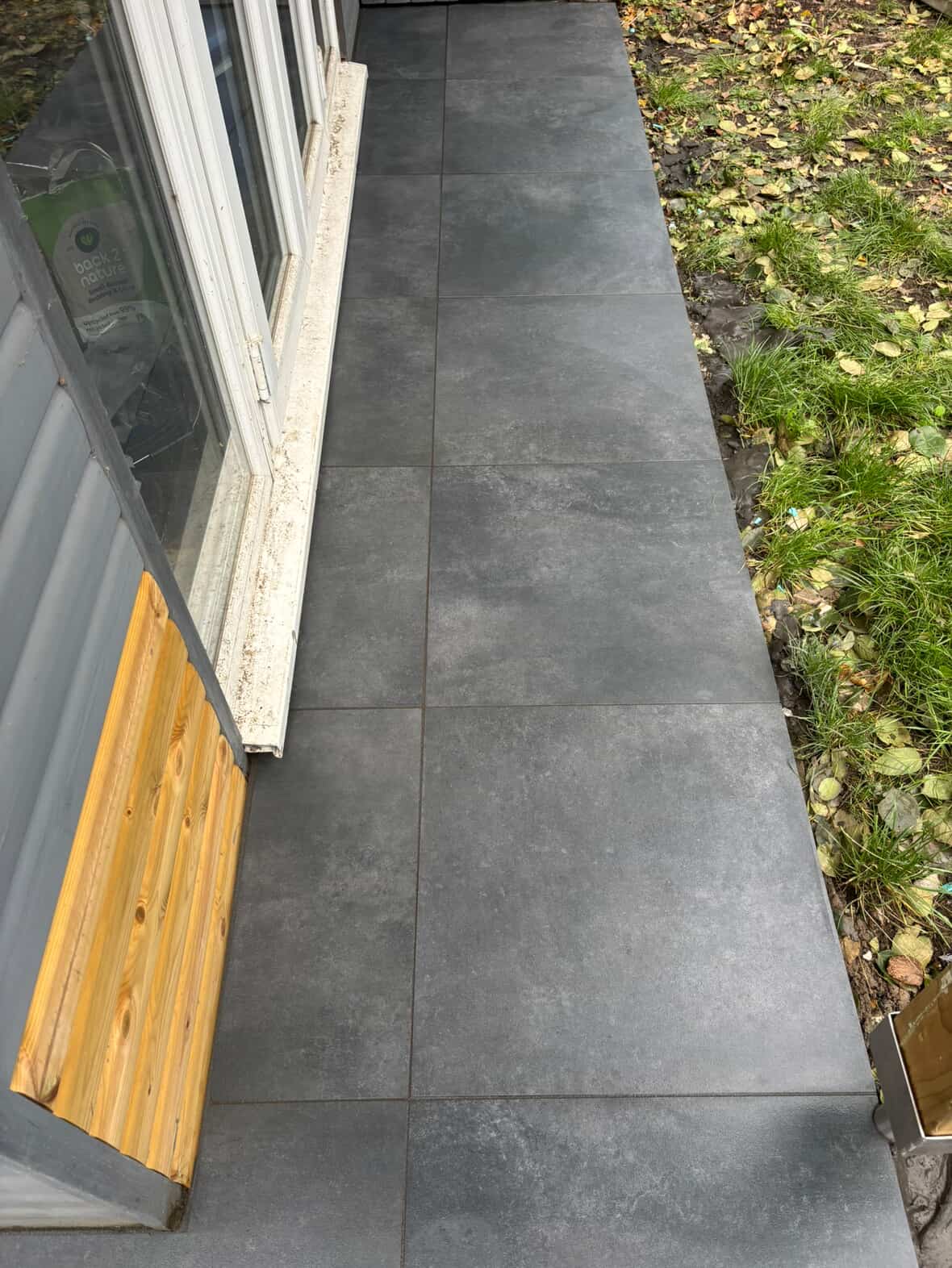
Porcelain is the one to look at for a modern extension or a clean, contemporary garden. Same colour right across the job, sharp edges, almost no maintenance. The better ranges look genuinely like stone now.
Block paving is worth a mention where the patio meets a driveway or a path, because you can carry one material through and the whole thing reads as deliberate rather than patched together.
Break a big patio up with shape and levels
A large square of paving can feel like a car park. The fix is to give it some shape.
A circular feature, a curved edge, or a change in slab size breaks up the expanse and gives the eye something to follow. On one Derby job we ran a circular sandstone detail into a rectangular patio, and it turned a flat area into something that actually looked designed.
Levels do the same job. If your garden slopes, don't fight it. A raised patio with a low retaining wall, or a couple of wide steps down to the lawn, turns a problem into the best feature in the garden. Sleepers or brick make a clean edge for the change in height.
Use more than one material to zone the space
You don't have to pick a single surface. Some of the gardens we're happiest with mix two.
A porcelain or sandstone patio for the seating area, a gravel section for a more relaxed corner, granite setts as a border to frame it all. The combination gives you zones without putting up a single fence or wall. It reads as one garden with different rooms.

The trick is keeping the tones in the same family so it looks considered. Two materials that argue with each other look worse than one plain surface.
Frame it with planting and sleepers
A patio with nothing around it looks unfinished. The edges are where a garden comes alive.
Raised sleeper beds along one side give you height and somewhere for planting without losing usable floor. They also double as casual seating, which is handy when more people turn up than you have chairs for. A curved brick wall can hold a border and soften the line between hard paving and lawn at the same time.
If you want greenery but not the upkeep, artificial grass next to the patio stays sharp all year and takes the bare-mud problem off the table for good. We fit a lot of it alongside new patios for exactly that reason.
Think about the evening, not just the afternoon
The gardens that get used most are the ones that work after dark. A few recessed lights in the steps, a string of festoons over the seating area, a single uplighter on a feature tree. It doesn't need to be much.
Run the cabling before the paving goes down. Retrofitting lighting into a finished patio is possible but messier and more expensive than doing it while the base is open. Plan it early even if you fit the lights later.
A few ideas that tend to go wrong
Not every trend survives contact with a real garden.
- Tiny mosaic or cobble patterns across a big area look busy and date quickly. Larger formats age better.
- Bright white paving shows every mark and turns green fast in a shaded Derbyshire garden. It rarely stays looking the way it did in the showroom.
- Patios built right up to the house without thinking about the damp course or drainage cause problems later. Get the levels and the fall right first.
Notes for small and north-facing gardens
Two situations come up a lot locally and both have a sensible answer.
Small gardens look bigger with larger slabs laid diagonally and a light, simple surface. Resist the urge to cram in features. One patio, one good edge detail, done well.
North-facing gardens stay damp and shaded through winter. Go porcelain if you can, keep the surface textured for grip, and don't choose anything too pale. A garden that never quite dries out is hard on porous materials.
Want some ideas for your own garden?
The fastest way to settle on a direction is to look at real patios in real Derbyshire light rather than scrolling through photos online. Have a look through our recent projects to see materials and layouts in finished gardens around Derby and Derbyshire.
When you've got a rough idea, get a free quote or call Jamie on 07891 632305. We'll come out, look at the space, and give you an honest steer on what will work, not just what's easiest to lay.