
Choosing the right patio material is one of the most important decisions you'll make when transforming your outdoor space. The material you choose will affect not only how your garden looks, but how much maintenance it requires, how long it lasts, and ultimately how much you enjoy using it.
At MIW Patios & Landscaping, we've laid hundreds of patios across Derby and Derbyshire, and we get asked this question constantly. Here's our honest breakdown of the three most popular options.
Indian Sandstone
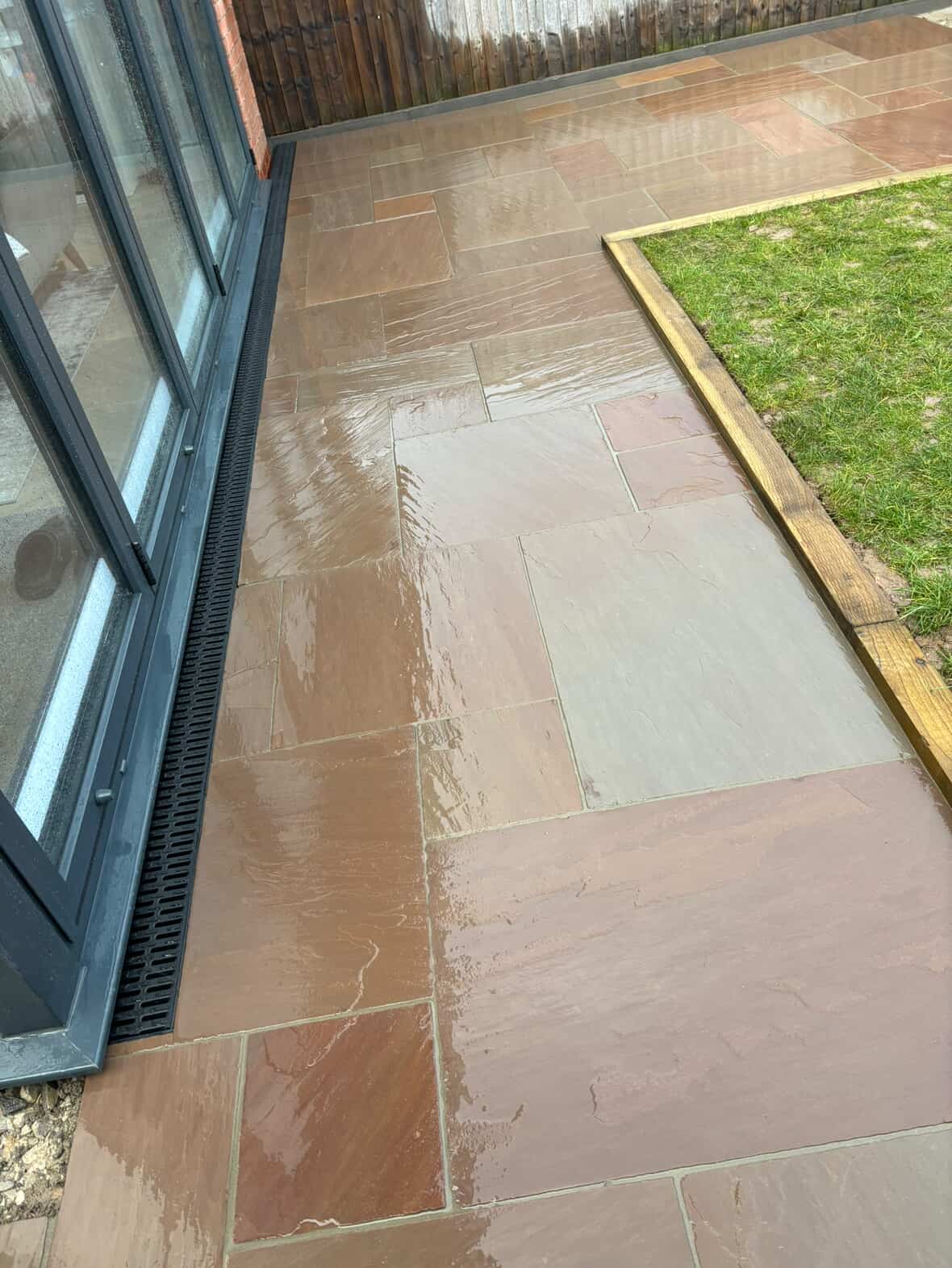
Indian sandstone is our most popular choice for a reason. It has a natural, warm appearance that suits traditional and contemporary gardens alike, and every slab is slightly different — which gives it a character you simply can't replicate with manufactured materials.
It's also highly durable when properly sealed and laid on a solid base. Most Indian sandstone patios we install are still looking great ten to fifteen years later with only basic maintenance. The main thing to be aware of is that it does require sealing every few years to protect against staining and to keep the colour looking vibrant.
Expect to pay a mid-range price for a good quality Indian sandstone patio. It sits between cheap concrete flags and premium porcelain, which for many homeowners makes it the sweet spot.
Porcelain
Porcelain is increasingly popular, and it's easy to see why. It's extremely hard-wearing, virtually non-porous, and requires very little maintenance. You can clean most marks off with a pressure washer or a mop and soapy water. It's also frost-resistant, which matters in a Derbyshire winter.
The downside is cost — porcelain is generally more expensive than sandstone, both for the material itself and for installation. It requires a very flat, solid base (often a full concrete bed) and more precise cutting because the tolerances are tighter. Done badly, a porcelain patio looks terrible. Done well, it looks stunning and lasts a very long time.
If you want a sleek, modern look with minimal upkeep and have the budget for it, porcelain is worth every penny.
Block Paving
Block paving is the go-to choice for driveways, but it works equally well for patios, particularly where you want a more structured, geometric look. It's very durable, and individual blocks can be replaced if they crack or become damaged — something you can't easily do with slab materials.
The main consideration with block paving is weed control. The joints between blocks can allow weeds to grow through over time, so using a good polymeric jointing sand at installation makes a big difference. Some homeowners also find it harder to keep clean than porcelain, as the textured surface can trap dirt.
Our Recommendation
If you're not sure where to start, come and have a look at some of our completed projects. Seeing the materials in a real garden context — rather than on a website or in a showroom — usually makes the decision much easier. We're always happy to give you our honest recommendation based on your garden, your budget, and how you plan to use the space.
Get in touch for a free, no-obligation quote and we'll talk you through all your options.